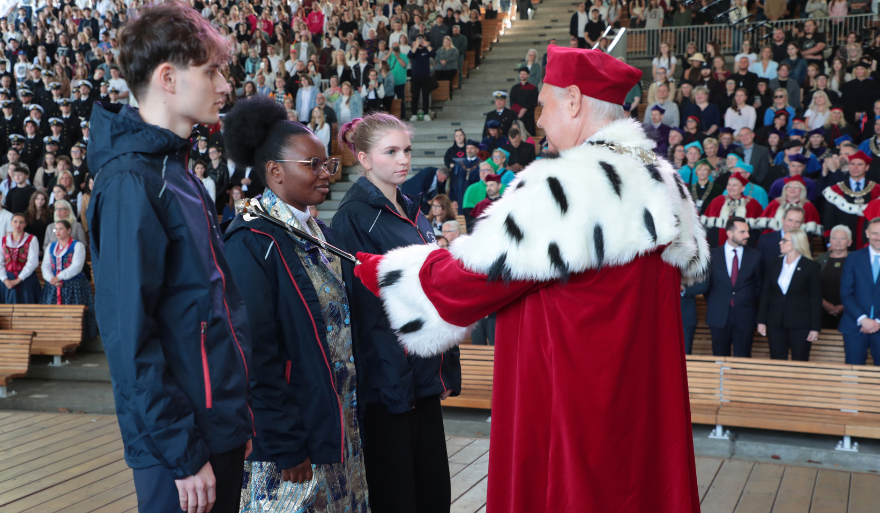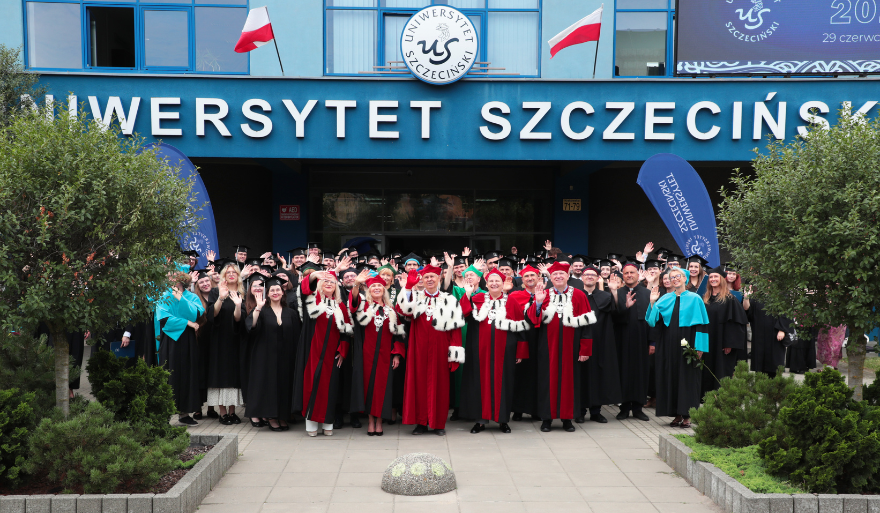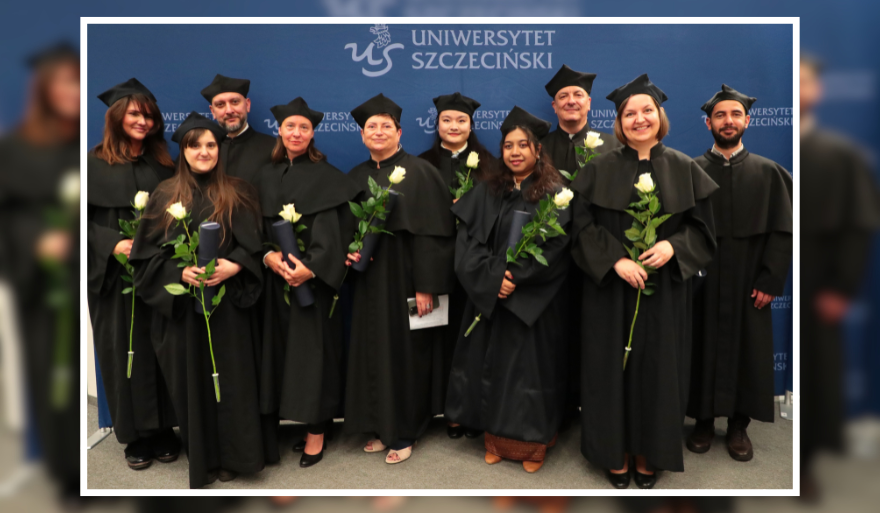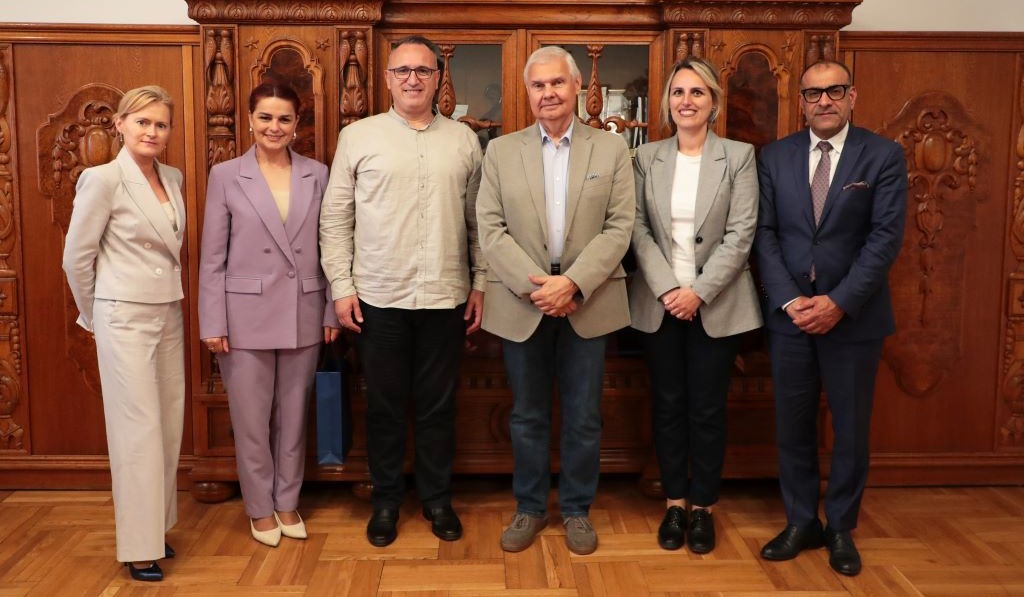
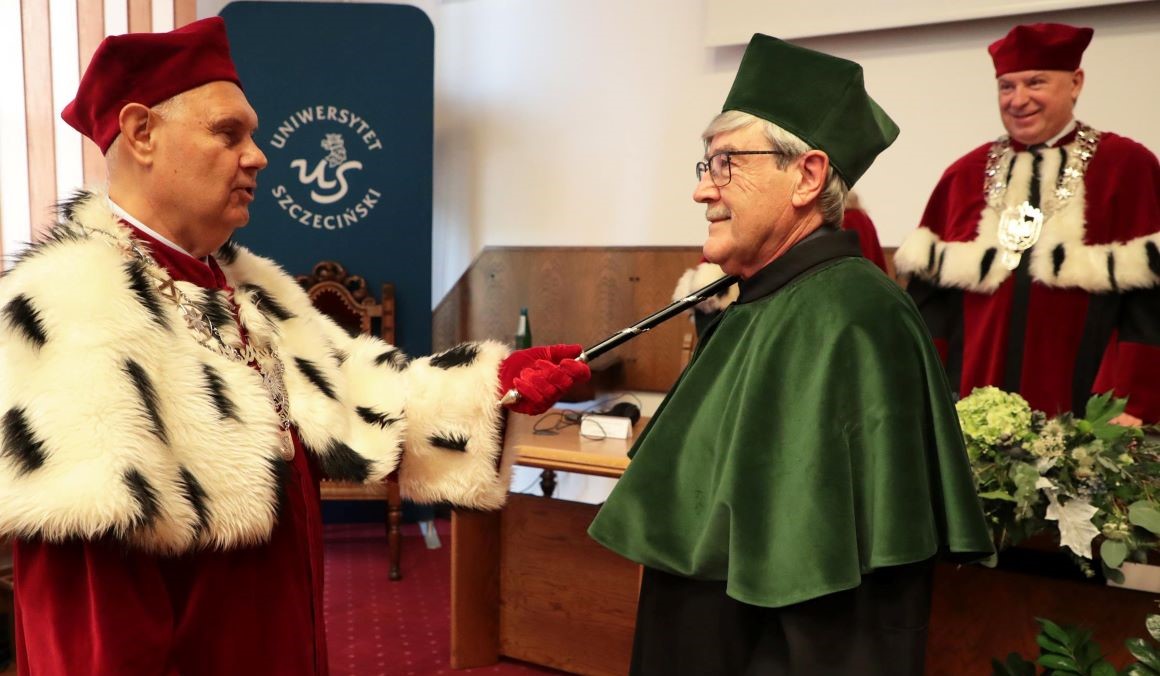
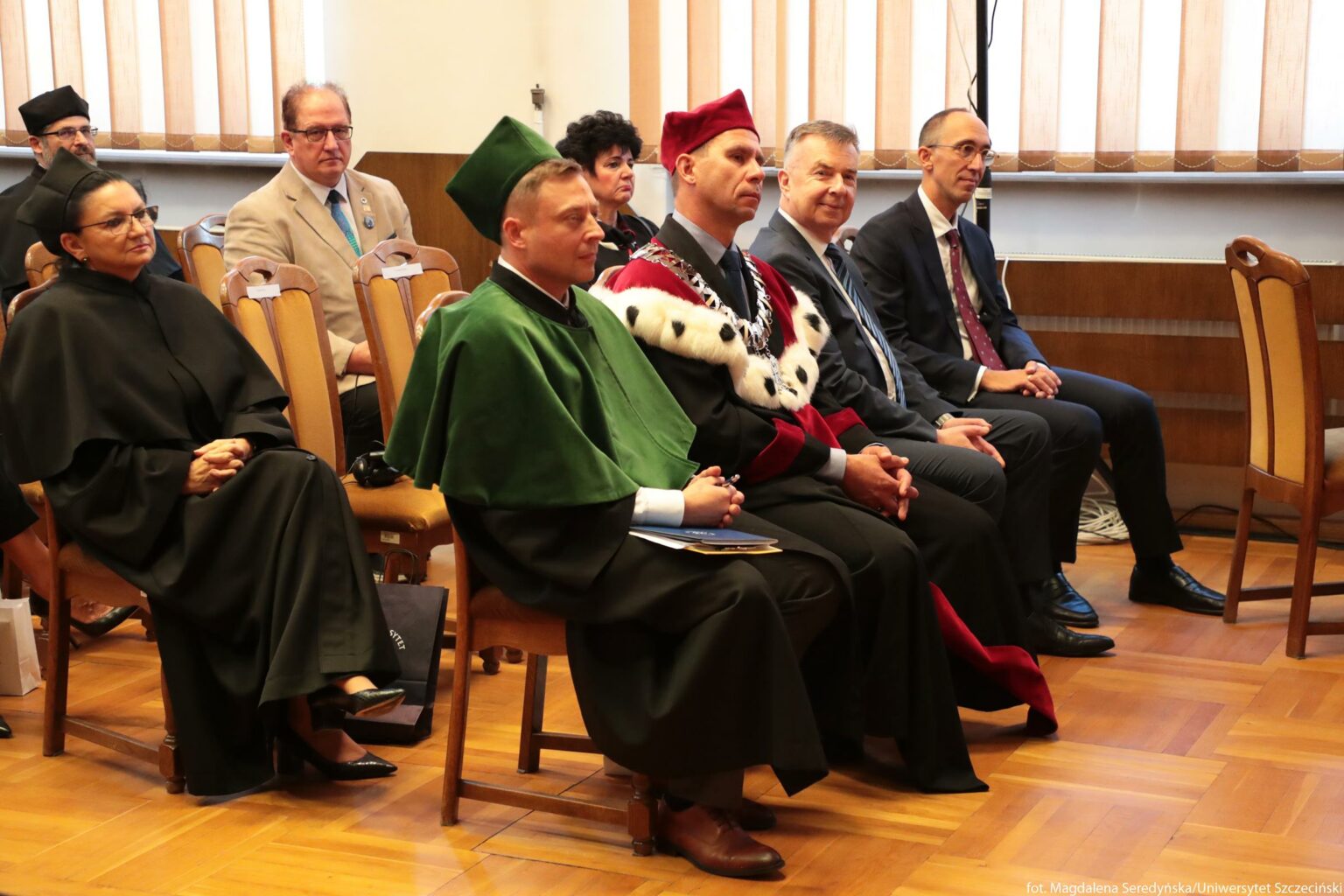
On October 14, 2026, the University of Szczecin hosted an exceptional ceremony conferring the degree of doctor honoris causa upon Prof. Paul Charles William Davies of Arizona State University—a distinguished quantum physicist, cosmologist, and science communicator. An event honoring a figure of such stature ranks among the most esteemed academic ceremonies.
In Professor Paul Davies, we honoured not only an outstanding scientist, but also a man whose inquisitiveness, courage in asking fundamental questions and passion for discovery inspire successive generations of researchers.
Prof. Paul C.W. Davies’s most significant contribution to the physical sciences lies in the development of quantum field theory in curved spacetime. His research interests stem from a holistic perspective on reality—extending from human existence and its environment to the fundamental laws governing the Universe. He is a recipient of the world-renowned Templeton Prize, awarded for “an exceptional contribution to affirming life’s spiritual dimension through insight, discovery, or practical works.” Throughout his scientific career, he has led as principal investigator dozens of research grants amounting to tens of millions of dollars. Particularly noteworthy is a 9-million-dollar grant initiated by the National Cancer Institute for the center he founded—the Center for the Convergence of Physical Science and Cancer Biology at ASU—which investigates the intersection of physical laws and cancer biology. For over a decade, he has also supported the scientific and outreach activities of the Szczecin Cosmology Group—an international research team operating within the Institute of Physics at the University of Szczecin.
The awarding of an honorary doctorate is a symbolic testament to the university’s academic standing and its mission to identify and set standards. The selection of a person to be honoured with this academic distinction constitutes a public declaration by the university to society and the academic community, a declaration of its choice of an authority and a role model.
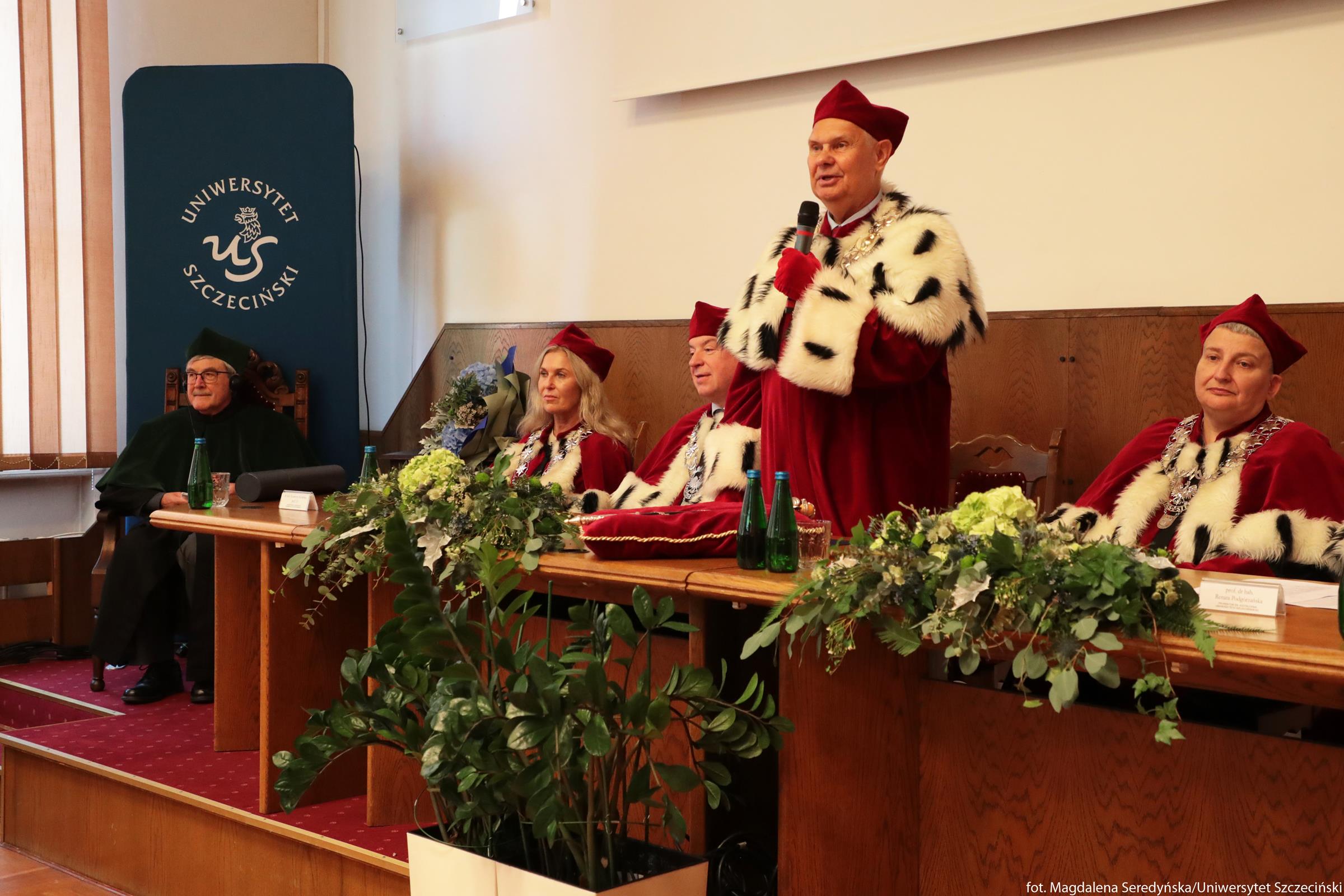
“An honorary doctorate is the highest honour awarded by a university. It is conferred in recognition of academic, cultural and social achievements, for being an outstanding individual, and for contributing to the socio-economic development of the world as a whole. Professor is an exceptional individual – he is a physicist who makes cosmology accessible. His body of work and scientific contribution make complex matters, things we cannot perceive, easier to understand. It is not just about physics, but also an attempt to answer the question of where we come from and where we are heading. The Professor has made a golden mark on the research leading towards this goal,” said Prof. Waldemar Tarczyński, Rector of the University of Szczecin.
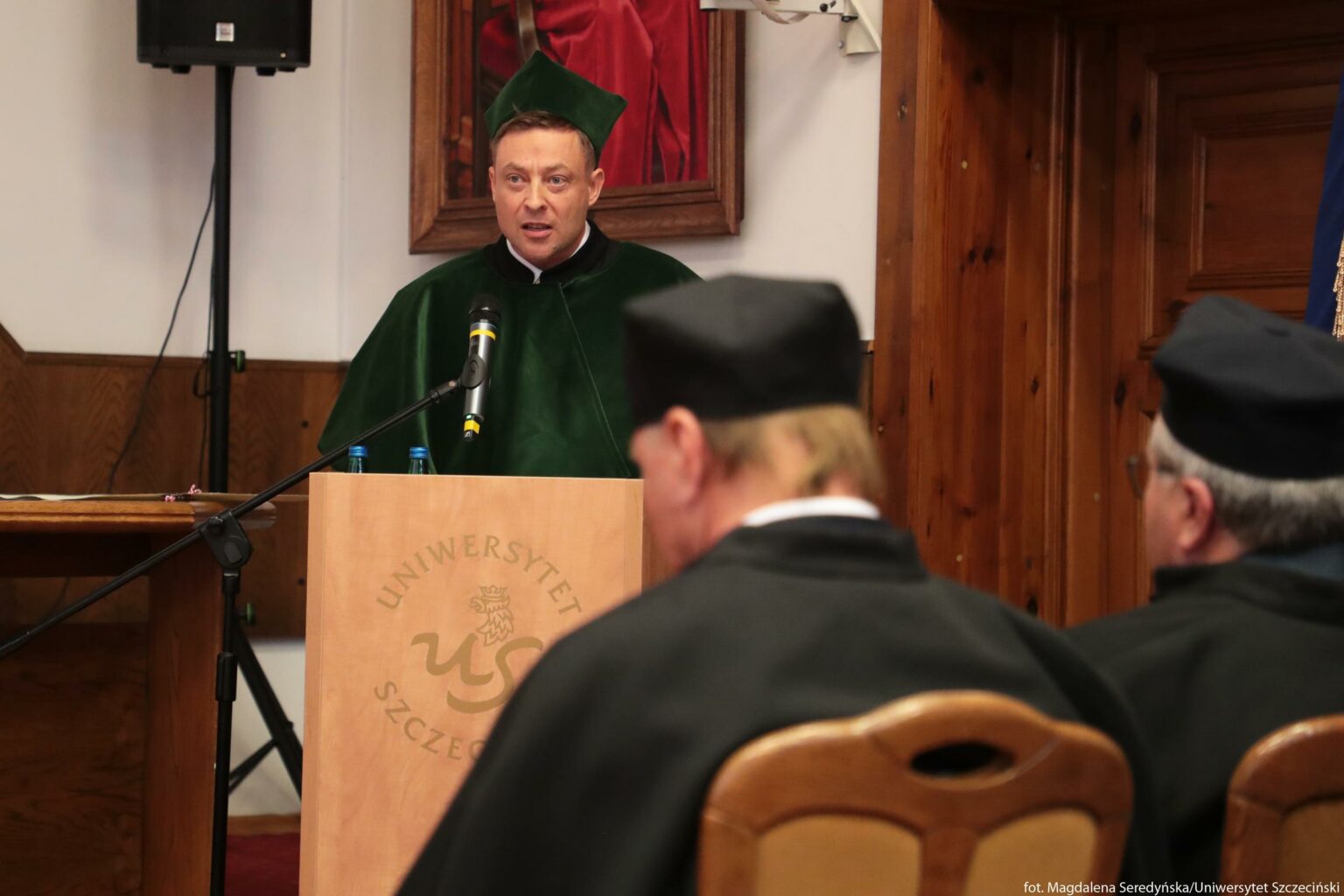
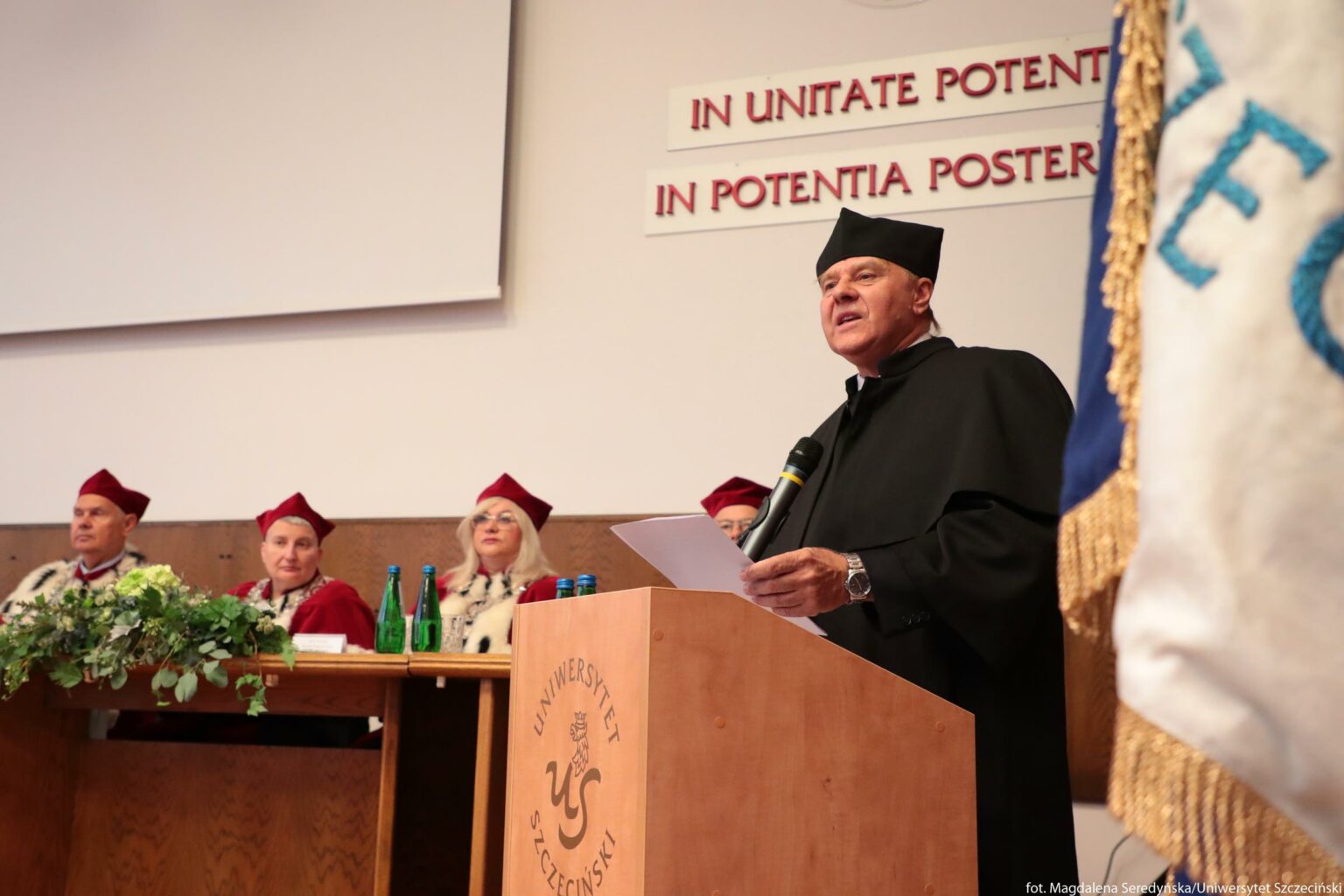
The Rector then read out the resolution conferring an honorary doctorate upon Professor Davies, whilst Dr Tomasz Denkiewicz, Professor at the University of Szczecin and Director of the University’s Institute of Physics, outlined the guest of honour’s biography, highlighting his achievements and noting that he has been, and continues to be, an inspiration and an authority for many physicists.
His research encompasses not only cosmology, the quantum field theory of curved space-time, the physics of black holes and the nature of time within them. He has also participated in a programme integrating physics into cancer research, which represents an invaluable contribution not only to science but also to the well-being of societies.
As noted by Prof. João Magueijo of Imperial College London, who was present at the ceremony, Professor Davies’s research also addresses the most fundamental existential questions—regarding the nature of time, the origin of the Universe, the essence of life, reason, consciousness, and the character of the laws governing the cosmos, all while remaining firmly grounded in the scientific discipline of physics.
“Human imagination, as Albert Einstein observed, is boundless, because the reality surrounding us is infinitely complex, and imagination reflects that reality. Not all of us perceive this. Only a true genius, whom we honor today, can discern it. For he poses any question—no matter how extraordinary or shocking—and pursues its answer without constraint. He ventures beyond the imperceptible. He asks overarching questions: where do the laws of physics originate, rather than merely the material world and life itself? The question of the origin of life and of extraterrestrial civilizations is actively explored by him. How to observe signs and signals of alien civilizations in the Universe, and whether these signals will align with what we as a civilization expect, is a query that has occupied Paul Davies’s mind for years,” said Prof. Dr. Hab. Mariusz Dąbrowski from the Institute of Physics at the University of Szczecin, who served as the supervisor in the honorary doctorate proceedings, during his laudatio.
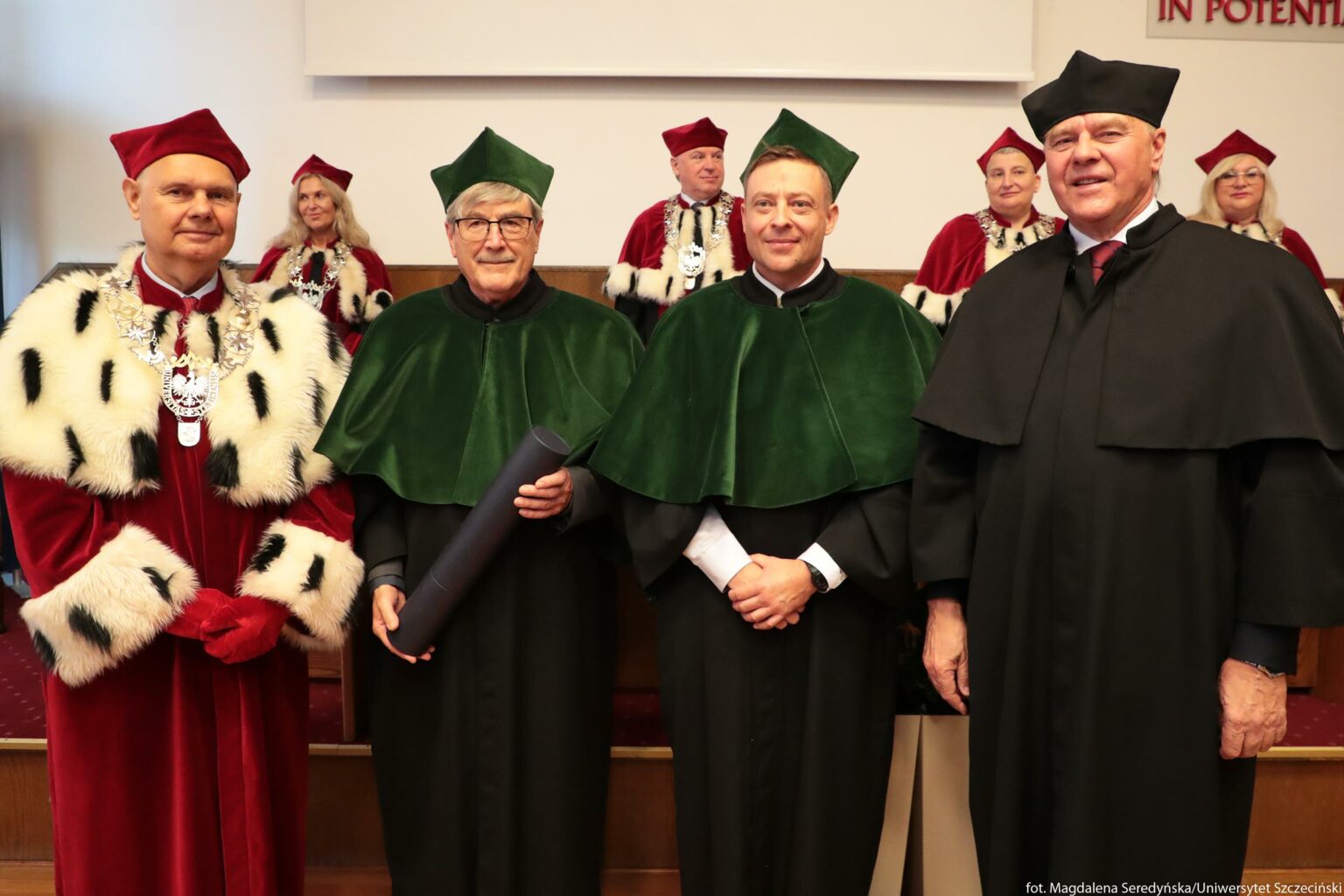
He pointed out that Professor Davies is regarded as a scientist who devotes a great deal of time to establishing the relationship between the physical and biological worlds and the phenomenon of consciousness, as well as the relationship between science and faith. The scholar maintains that God is pure mathematics, and that science offers a more reliable path to God than religion, because religions cannot remain credible if they ignore scientific progress.
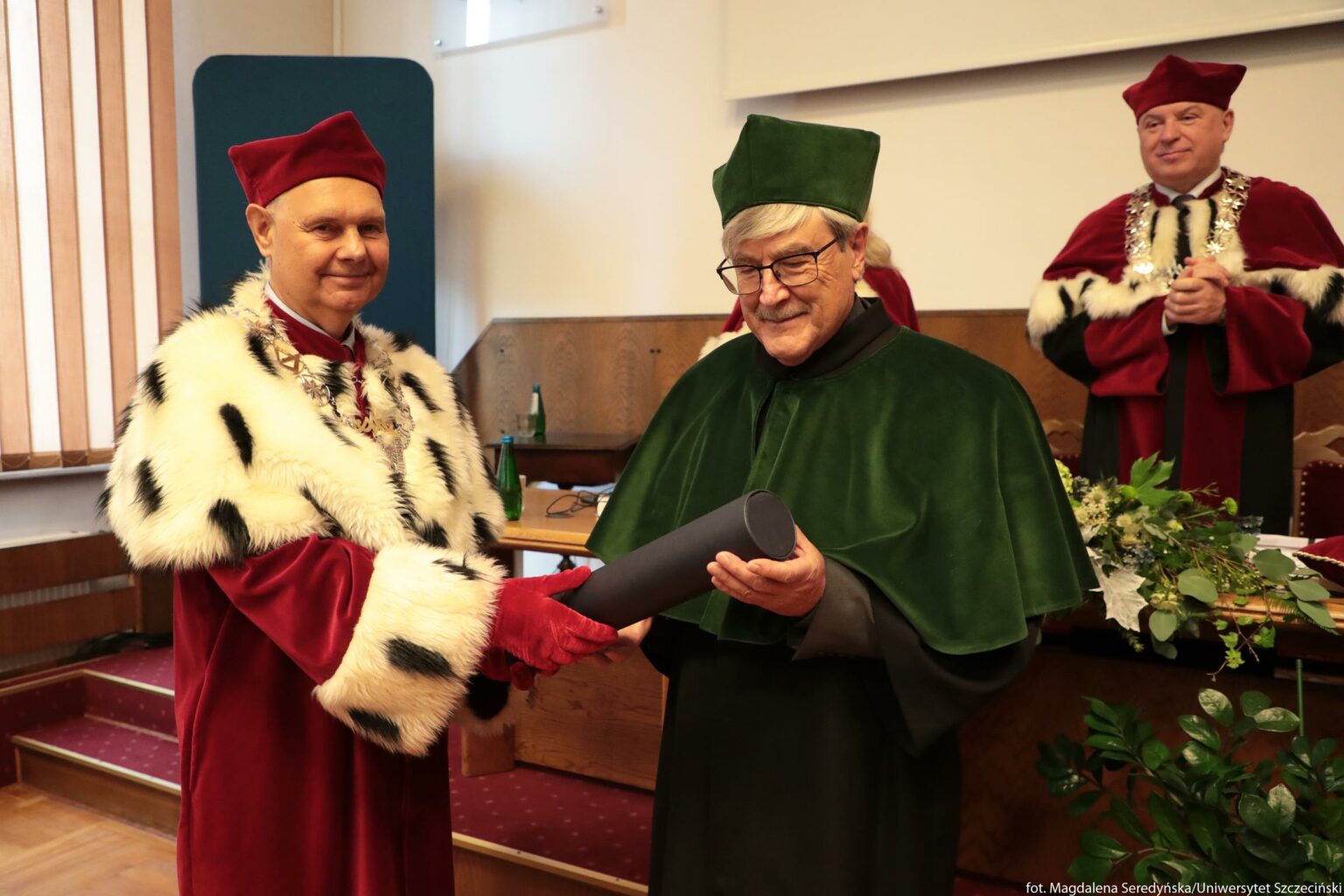
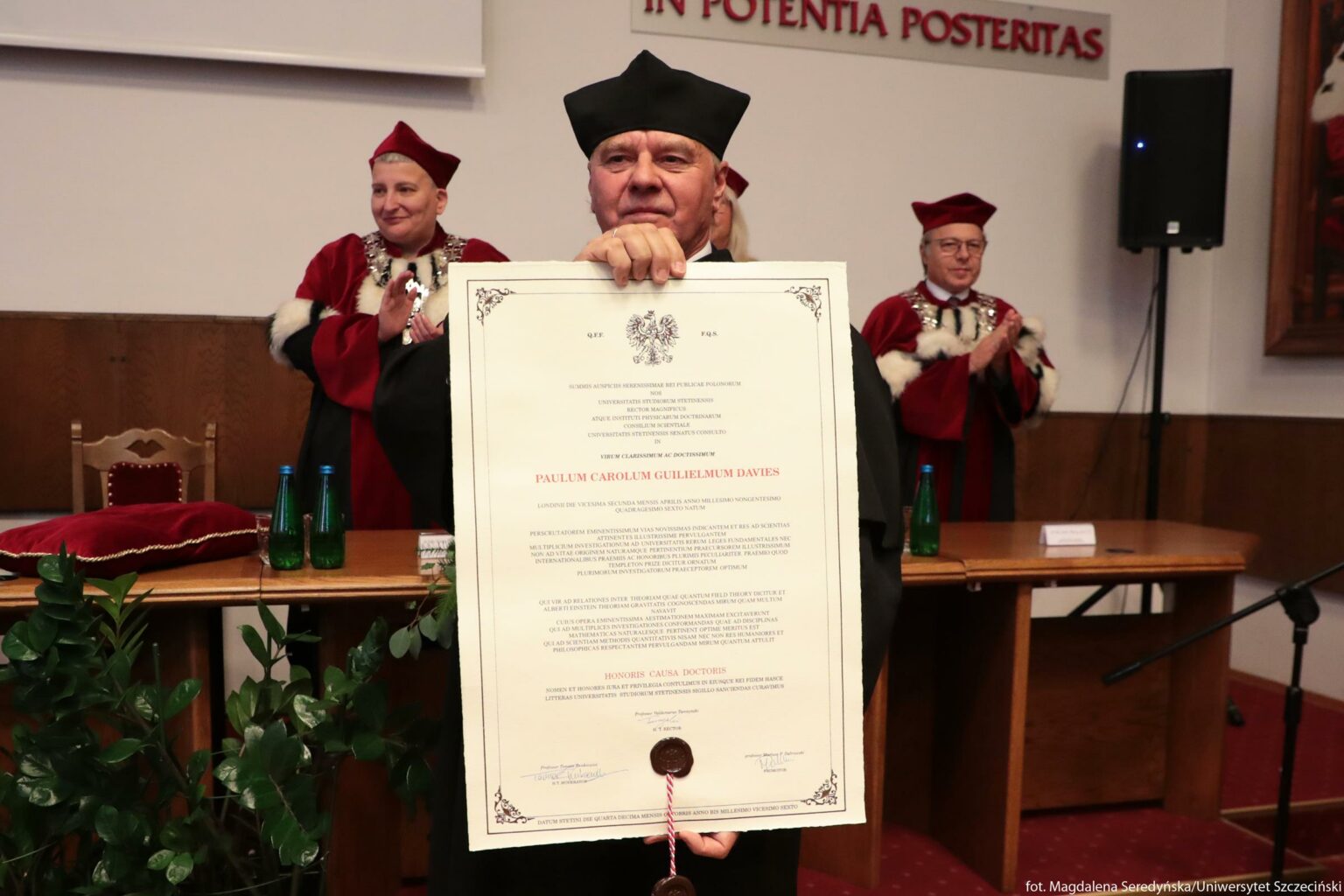
The laudation was followed by the reading and presentation of the diploma to the newly appointed Doctor honoris causa.
“I would like to express my deep gratitude for the honour bestowed upon me. Recognition of one’s lifetime achievements is, in many respects, more rewarding than the occasional, specific success achieved during one’s professional career. My research interests have been very diverse: from the origin of the Universe to the emergence of life, from the nature of time to the nature of consciousness, and I have even been drawn to such highly speculative topics as time travel and the search for extraterrestrial intelligence. Furthermore, I spent several years researching cancer, helping to develop a completely new way of addressing questions such as: what is cancer and why does it exist? If there is a common thread linking these seemingly disparate fields, it is the conviction that the profound problems we often encounter in our scientific pursuits prove difficult to solve, frequently because we are thinking about them in the wrong way. So, I often tell people that I was born a physicist. From a very young age, I was fascinated by how the world works, the existence of hidden forces and fields, and the way in which people are able to devise ingenious methods for uncovering the structure of the Universe and discerning patterns that are not visible in everyday life,” said Professor Paul Davies.
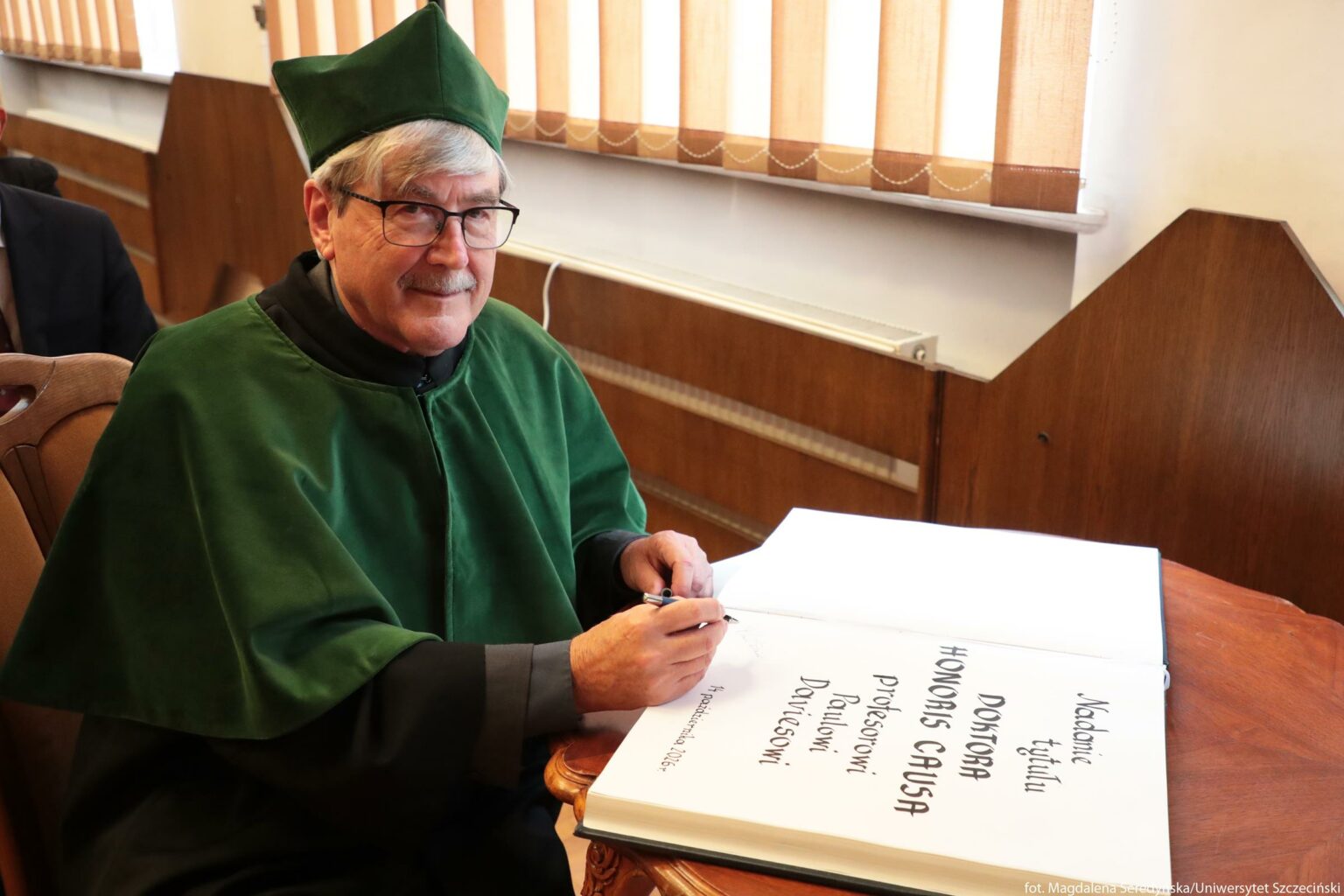
He devoted most of his academic career to investigating whether quantum physics really does provide answers to the pressing questions about the origin of the Universe. As he pointed out, we still know more about the origin of the Universe than about the origin of life. Physics and cosmology thus intersect here with theology and philosophy.
“The probability of inanimate matter transforming into living matter is key to answering the question of whether we are alone. If life arises easily under conditions similar to those on Earth, then we know that there are countless Earth-like planets, and the Universe should be teeming with life. If, however, the transition to life was an aberration – a kind of rare one-in-a-trillion coincidence – then Earth may be the only inhabited planet in the galaxy. I find this prospect depressing, but in my view, it remains the default position,” explained Prof. Davies. He also raised questions about our consciousness and about artificial intelligence in this context. He pointed out, however, that regardless of whether AI becomes conscious or is simply a fantastic new tool, universities must grapple with the question of how to engage with it without undermining the human creative process – both in teaching and in scientific research.
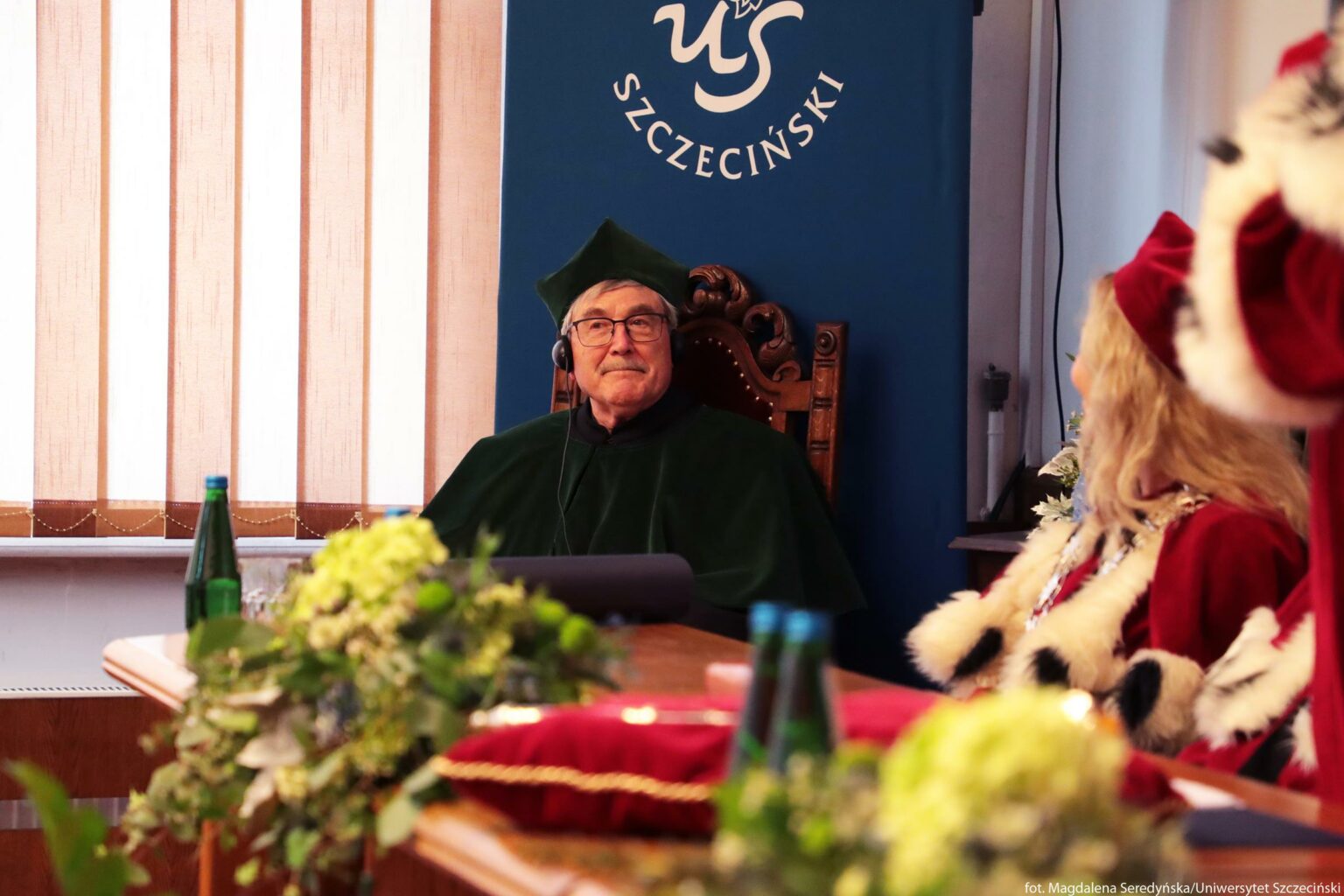
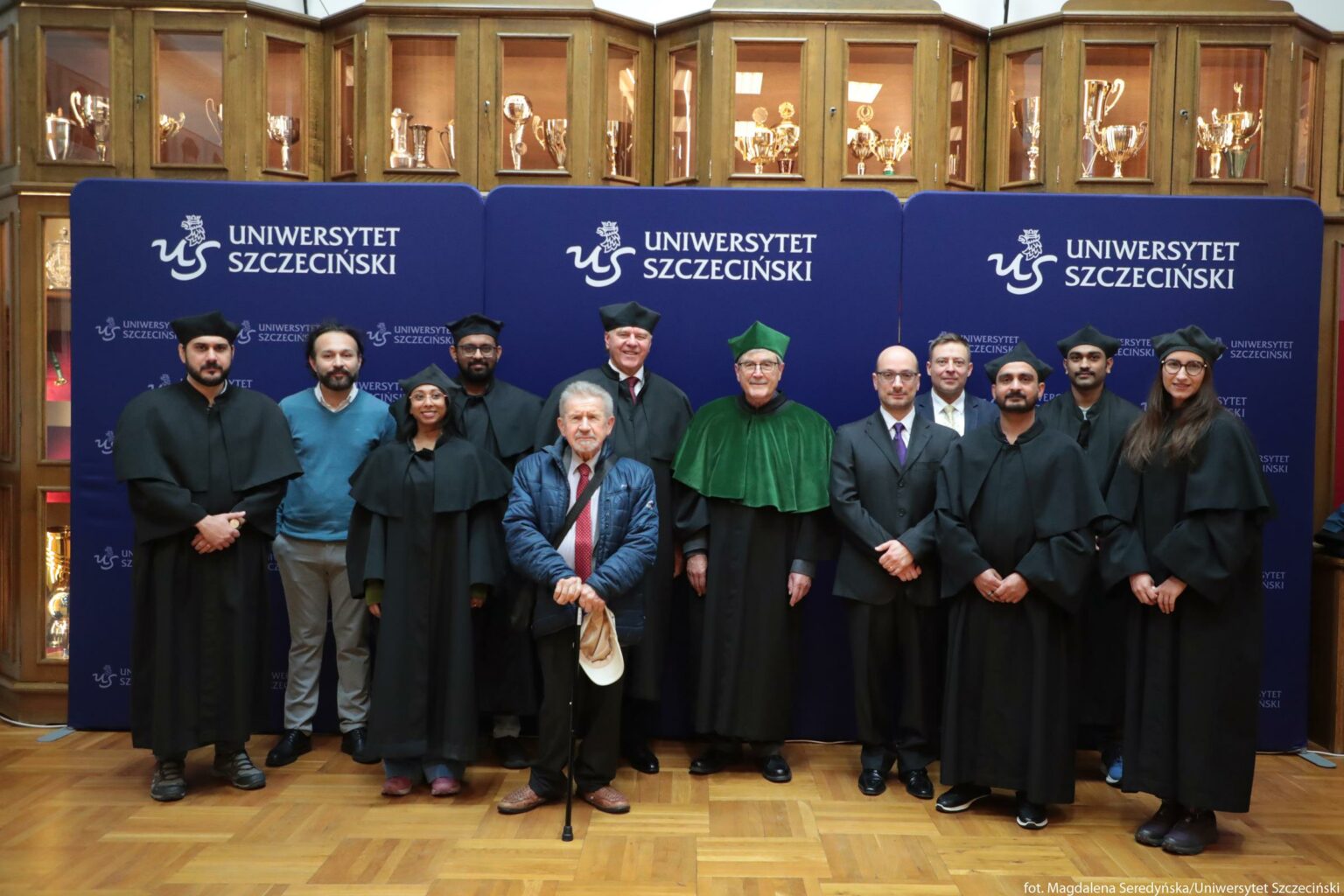
It is a great honour for the University of Szczecin to count such an outstanding scholar amongst its honorary doctors. A report on the event was produced by UNIWZJA – the University of Szczecin’s television channel.
Report on the conferral of the honorary doctorate