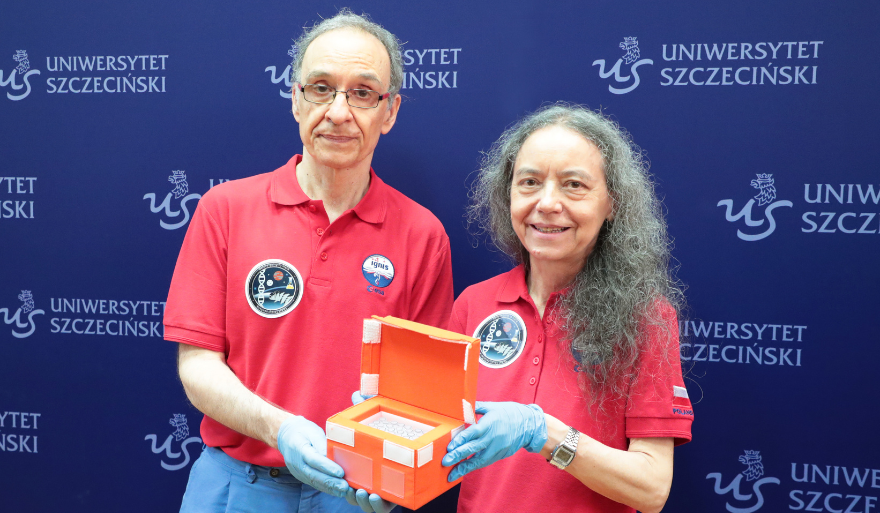
With the return to Earth of Dr. Sławosz Uznański-Wiśniewski, the first stage of the Yeast TardigradeGene experiment has been completed. It involved culturing modified yeast under conditions of gravity and increased doses of ionizing radiation found on the International Space Station (ISS). The yeast is already in Earth laboratories in Poznań and Katowice, where it is undergoing a series of tests to determine its “health and condition.”
We can initially say that the cultivation on the ISS proceeded as expected, and we have excellent material for the planned analyses. Furthermore, preparations are underway to conduct an experiment similar to the one on the ISS, but in Earth’s gravity, which will serve as a control experiment.
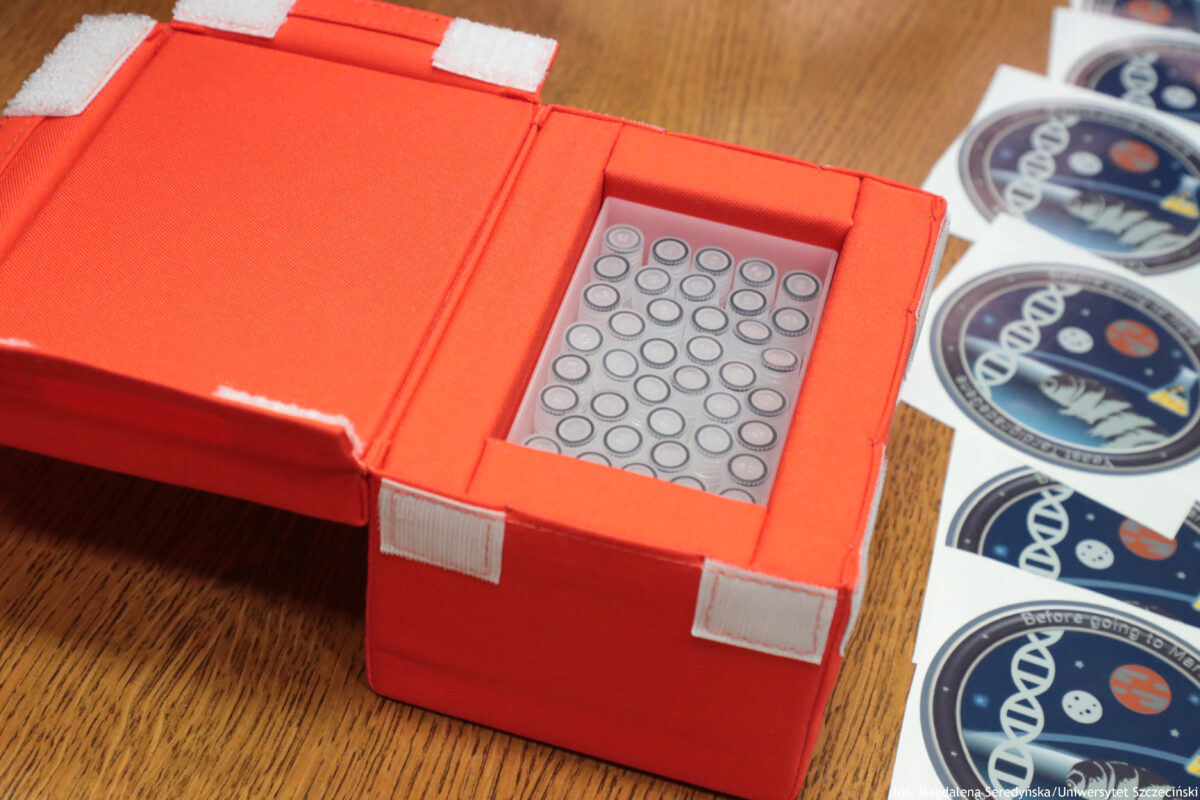
The payload of the Yeast TardigradeGene experiment was delivered to the laboratory at the Department of Bioenergetics of the Institute of Molecular Biology and Biotechnology at the Faculty of Biology, Adam Mickiewicz University in Poznań, headed by Prof. Hanna Kmita.
Adam Mickiewicz University in Poznań, along with the University of Silesia in Katowice, is a member of the consortium, coordinated by the University of Szczecin, which is implementing the experiment.
The members of the three-university consortium, led by Prof. Ewa Szuszkiewicz, would like to thank those involved in the implementation of the experiment: Sławosz Uznański-Wiśniewski for taking care of the Yeast TardigradeGene experiment payload; Aleksandra Bukała, the Ignis mission manager, for the efficient execution of the first Polish manned mission to an orbital laboratory; Frank De Winne, the team leader at the European Space Agency, responsible for the development of services and technologies related to low Earth orbit, and all those who contributed to this wonderful event.