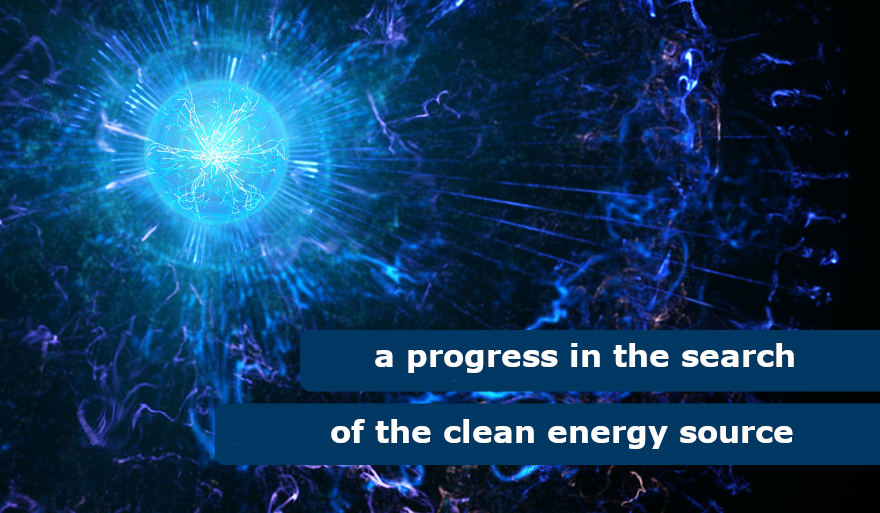
Scientists from the Institute of Physics at the University of Szczecin are leading the way in the search for a new, efficient source of energy. The results of their experiments have recently been published in prestigious scientific journals. This could be a breakthrough for research into cold nuclear fusion and the creation of a new source of energy.
A team of scientists led by Prof. Konrad Czerski has identified a new, highly excited resonance state in the nucleus of helium-4, which leads to a significant increase in the probability of deuteron fusion at room temperature. The results of this research represent a breakthrough in the field of cold nuclear fusion and have been published in the prestigious journal Physical Review X.
Prospects for the development of a safe energy source
The discovery is the result of many years of experiments conducted at the eLBRUS Experimental Physics Centre at the University of Szczecin, equipped with a globally unique ultra-high vacuum accelerator. For the first time, scientists have recorded annihilation radiation and inhibition radiation originating from the decay of a new, narrow resonance level in the helium-4 nucleus with an excitation energy of 23.8 MeV. This state occurs in a deuteron-deuteron reaction and decays mainly through the formation of an electron-positron pair. Previously, its existence had only been predicted theoretically, and the current experiments have confirmed these assumptions experimentally for the first time.
‘The discovery opens up new research perspectives on the creation of chemical elements in the universe and the use of so-called cold nuclear fusion to develop an efficient, cheap, clean and safe source of energy,’ emphasises Prof. Konrad Czerski. This is an alternative to thermonuclear reactions, which can only be used in very large devices, such as tokamaks or stellarators, where plasma is maintained at very high temperatures above 100 million degrees.
Increasing the efficiency of nuclear reactions
The second key effect enhancing deuterium-deuterium fusion and studied by the team from the University of Szczecin is the phenomenon of electron screening, which plays a fundamental role in increasing the efficiency of nuclear reactions at low energies. This phenomenon consists in weakening the electrostatic repulsion between positively charged atomic nuclei thanks to the electrons surrounding them, which significantly increases the probability of fusion. Research conducted in Szczecin has shown that this effect is strongly dependent on the crystal lattice defects of the material under study and its degree of oxidation.
“This has made it possible to demonstrate that the efficiency of deuteron fusion at room temperature can increase by up to twenty orders of magnitude, opening the way to potential industrial and energy applications. Properly prepared metal samples or nanostructures may become a key element of future reactors based on low-energy nuclear reactions,” explains the research leader.
The research was part of the international CleanHME (Clean Energy from Hydrogen-Metal Systems) project, funded by the European Union’s Horizon 2020 programme. The project, coordinated by the University of Szczecin, was carried out in cooperation with 16 research centres and industrial partners from Europe and around the world. Its main objective was to develop a new energy source based on low-energy nuclear fusion phenomena.
‘A detailed understanding of the nature of the new resonance in the helium-4 nucleus will be of great importance for the design of future energy sources based on deuterium fusion. In the past, the so-called Hoyle resonance, which explained the process of carbon synthesis in stars, was of similar importance for science and technology,’ emphasises Prof. Konrad Czerski.