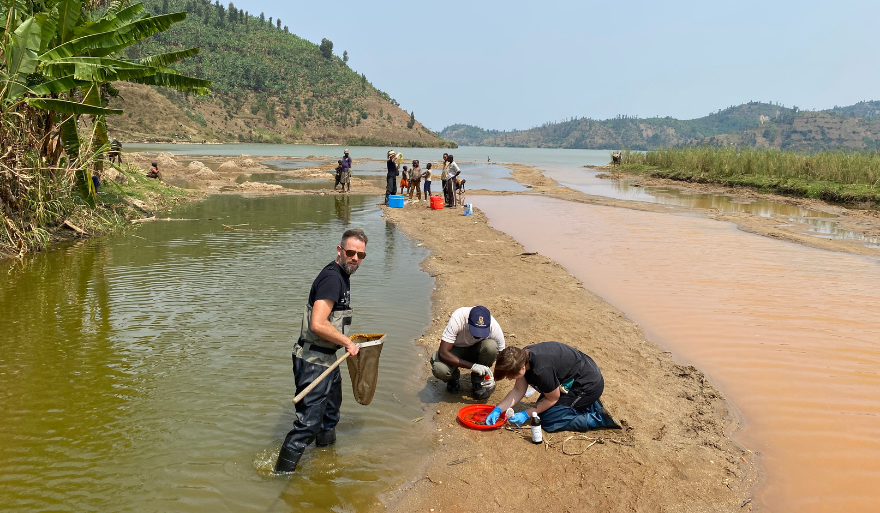
The team of the Department of Hydrobiology of the University of Szczecin conducted another scientific study of aquatic ecosystems in Rwanda in August 2024. This time, the research covered aquatic invertebrates and the physicochemical state of the waters of the Koko River catchment area flowing into the charming Lake Kivu. We invite you to read the report from the fascinating expedition of our scientists.
The Koko River is characterized by a relatively high naturalness of its riverbed. It is largely a poorly regulated river, little transformed, hence it retains its features typical of a natural river. Of course, it owes its condition mainly to its location, among difficult to access areas surrounded by high mountains and to the geological conditions. The vast majority of the banks are high and steep rocks, making its riverbed difficult to access for general use. By car, we only got to three research sites. We had to reach the remaining nineteen on foot. Of course, we quickly realized that this was a real treat and pleasure for us. Every day we covered kilometers in search of sites, walking along the bottom of the valley, wading in the river when the banks were too steep, or climbing the walls of waterfalls. When the waterfall was too high, we were forced to bypass it, climbing several dozen meters up the mountainside. A common practice was to climb several hundred meters up steep slopes, which required traversing mountain slopes and after a few kilometers hiking down to reach the previously established research goal.
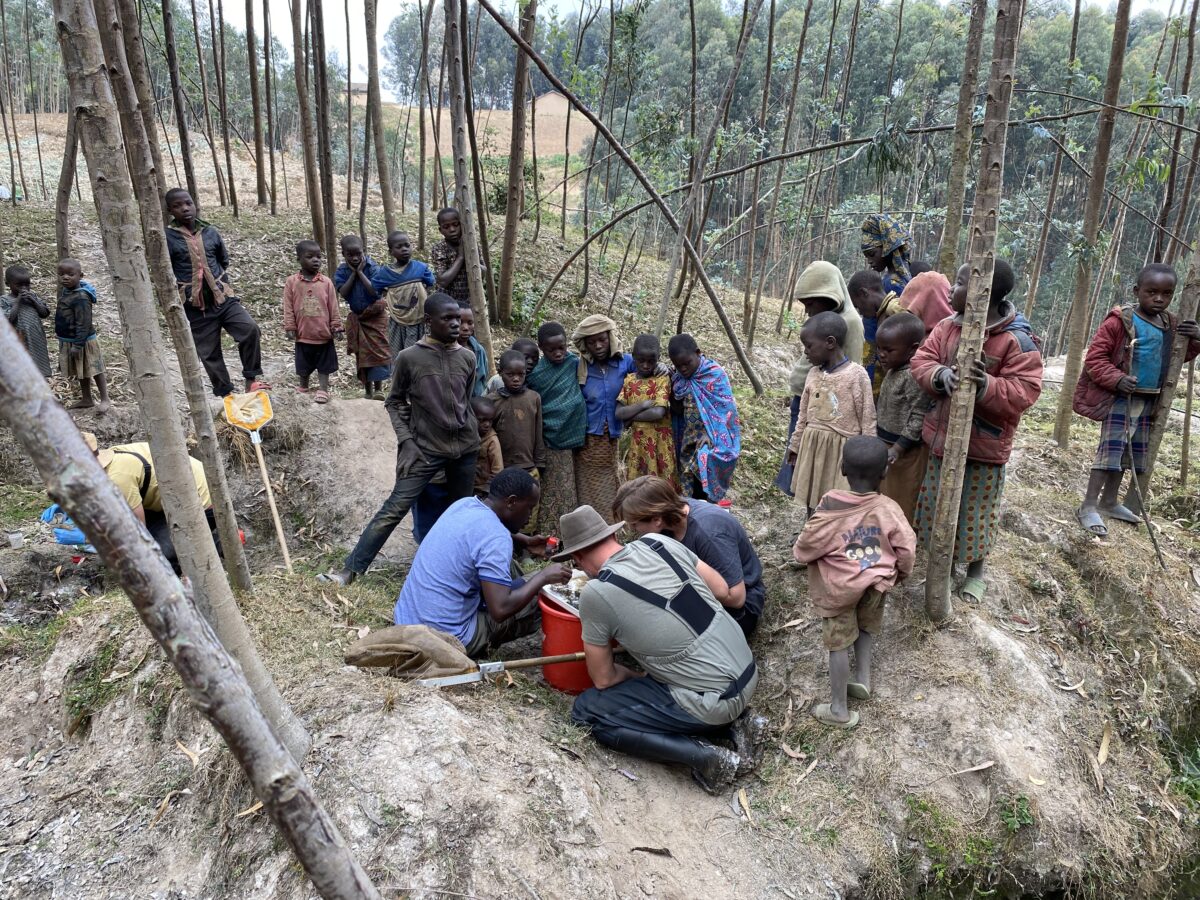
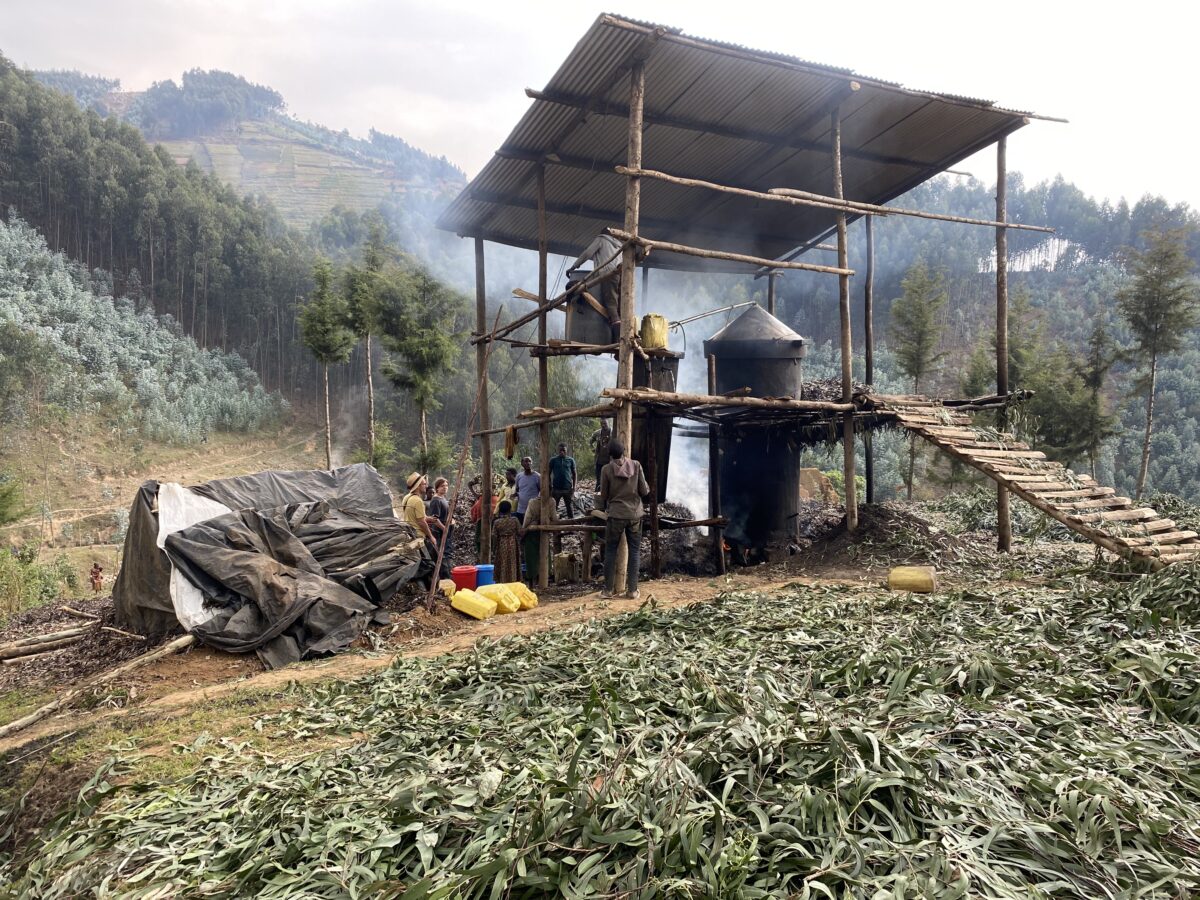
A hike along the slopes of plantations was certainly an unusual experience. On the way we passed their owners, who conquered such heights of several hundred meters several times a day. Often our hikes were accompanied by children, and every day at least one local, certainly uncertified guide was willing to help, without whom there would be no chance of finding the right way, including the way back. Such a hike, between plantations, was especially valuable due to the replenishment of energy and water losses. It was difficult to carry bottles of water with you. A picked, fresh pineapple not only turned out to be a valuable supply of water, sugar and vitamins, but also its taste… ambrosia. Hiking high in the mountains between villages, often without roads allowing cars to move, without access to running water or electricity, we met many people who were curious about our work. Interesting for us were the very makeshift places of charcoal production, at an altitude of over 2300 m above sea level, and eucalyptus oil factories, where the producers had mastered the cottage industry technology perfectly.
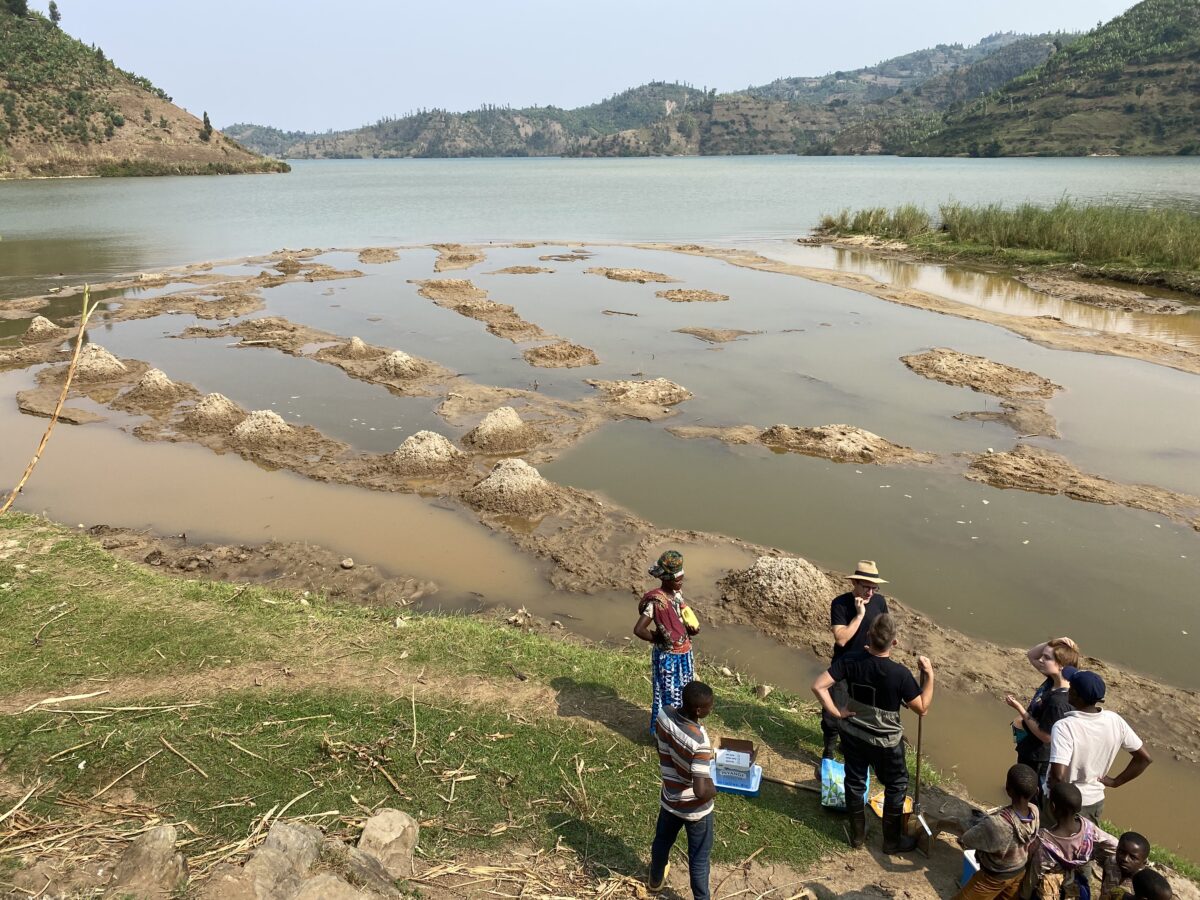
After such an eight-hour walk, in rubber boots or rubber fishing waders, with sampling equipment in our hands, we were physically tired, that’s normal. However, it filled us up spiritually, quite strongly. This definitely outweighed the physical effort, which was ultimately very positive.
We collected more very valuable biological samples. We expect new species. We are certain that in this place, in this river, we did many things for the first time, as scientists from around the world. This is another lesson for us, very valuable. Our work was also appreciated by the Rwandan authorities and environmental protection agencies, which participated in our research. Our results will be part of state monitoring.
This expedition would not have been possible without the help of many people from our university, but also from Rwandan units. We would like to thank prof. Waldemar Tarczyński – Rector of the University of Szczecin and dr hab. Kinga Flaga-Gieruszyńska, prof. of the University of Szczecin, Vice-Rector for Organization for great help in all administrative matters.
Team of the Department of Hydrobiology, University of Szczecin